
In Chitrakoot's rural heartland, a doctor is not a phone call away — for many families, the nearest functional health facility is hours of travel across difficult terrain. Despite improvements at the national level, large sections of the rural population continue to live without access to qualified doctors, diagnostic services, or even basic awareness of preventive healthcare. Hypertension, diabetes, and other non-communicable diseases develop quietly and go undetected until they reach advanced and costly stages. Oral health problems are equally widespread, yet dental services are virtually absent. And without guidance on nutrition, hygiene, and medication adherence, families cycle through the same illnesses repeatedly — facing avoidable complications and growing financial strain on already vulnerable households.
Rooted in this reality, Arogyadham has drawn on one of India's oldest healthcare traditions — the grandmother's medicinal pouch. In nearly every rural household, a generation ago, the elder woman of the family kept a small cloth bag of locally sourced herbs and remedies. She knew which leaf eased a fever, which root settled a stomach, which paste soothed a wound. These were not superstitions — they were treatments refined through generations of lived experience. Arogyadham has revived and formalised this wisdom in the form of the Dadi-Ma-Ka-Batua — a curated medicinal kit containing 35 herbal medicines prepared in Arogyadham's own Rasashala. Every medicine is made from locally available herbs, tested through Ayurvedic practice, and priced so that even the poorest household can afford it. Simple, illustrated instructions in plain language accompany the kit, enabling families to treat common ailments confidently at home. Socially aware individuals in each village are also trained in its use — treating neighbours and referring serious cases to Arogyadham for further care.
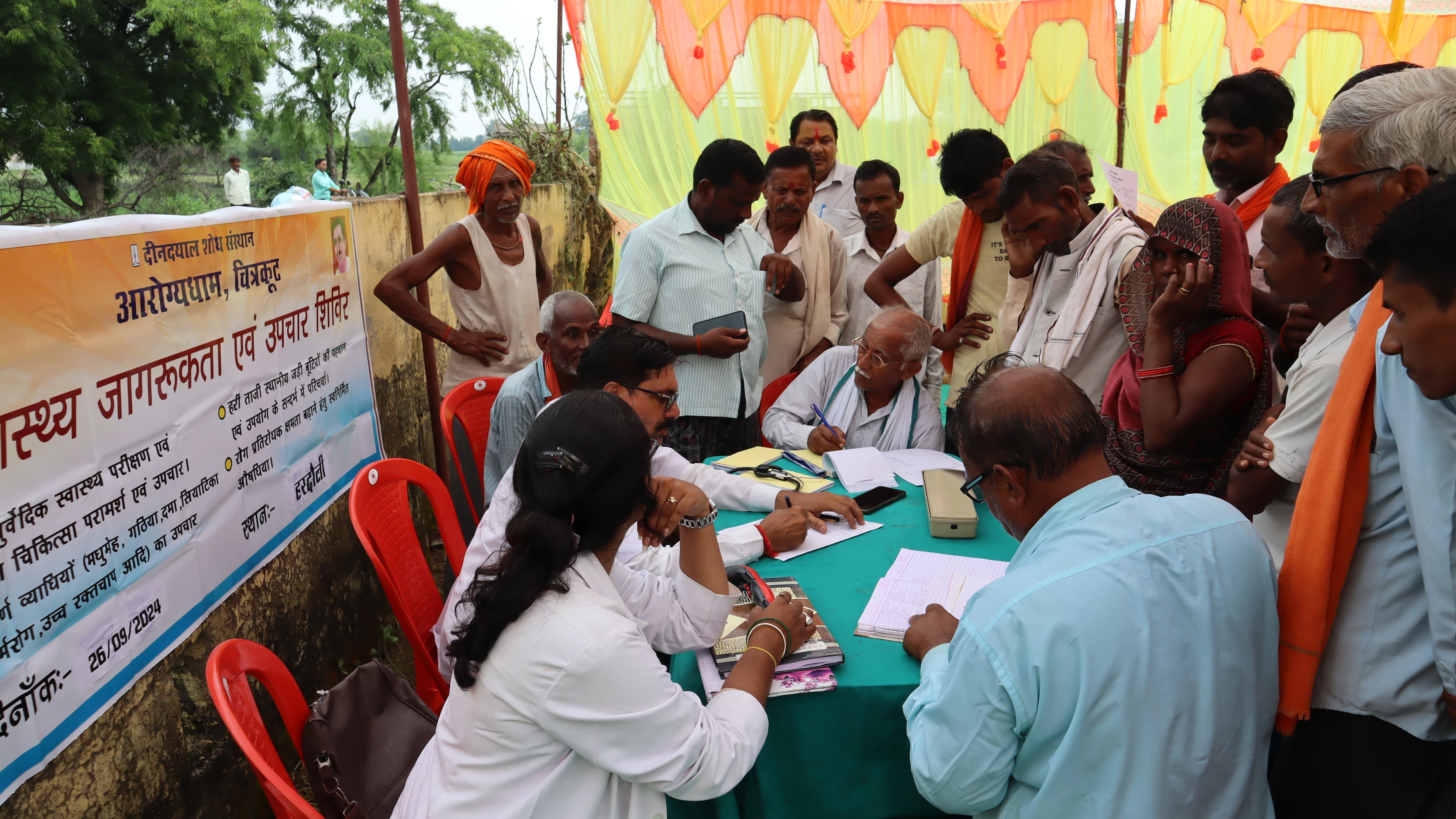
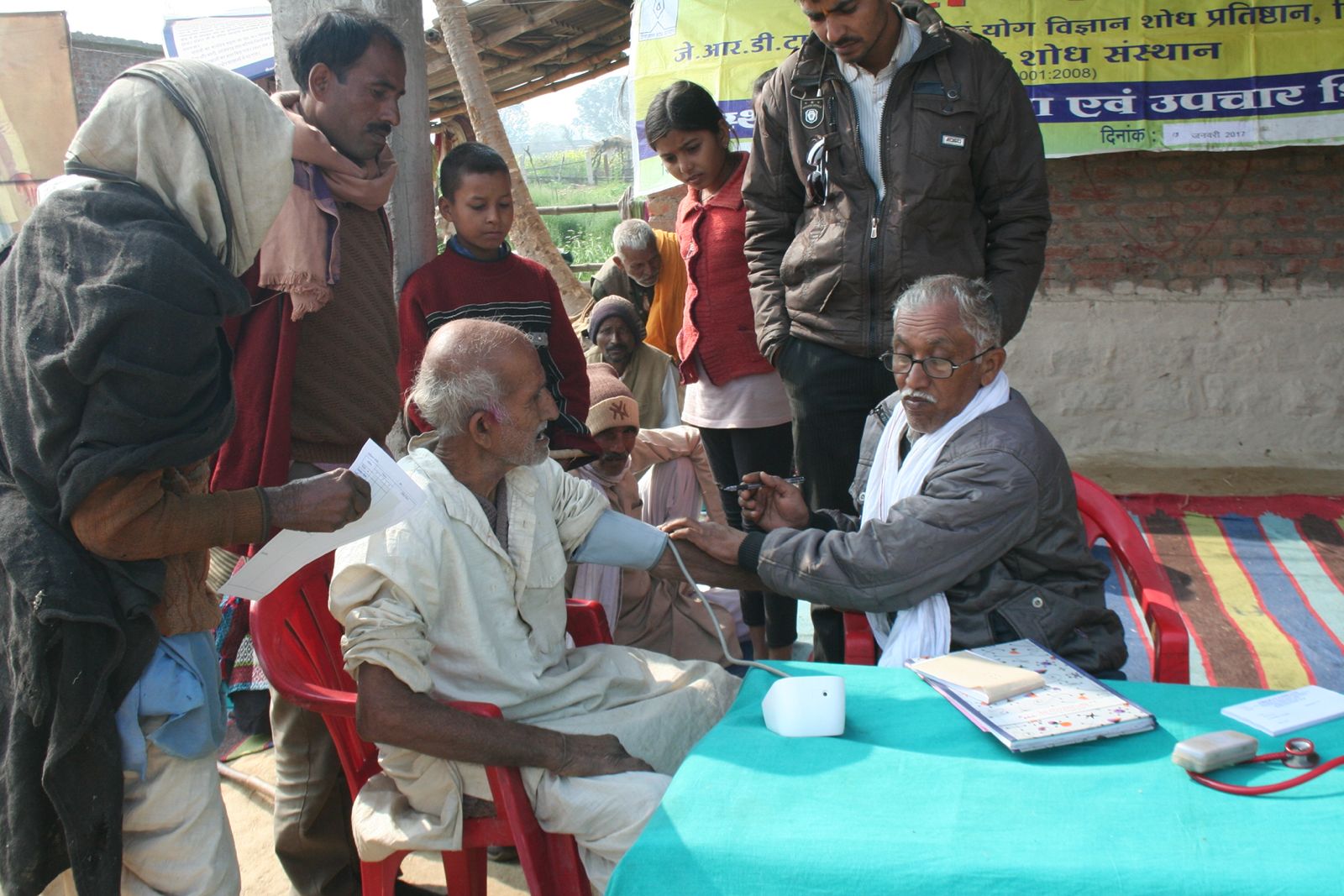
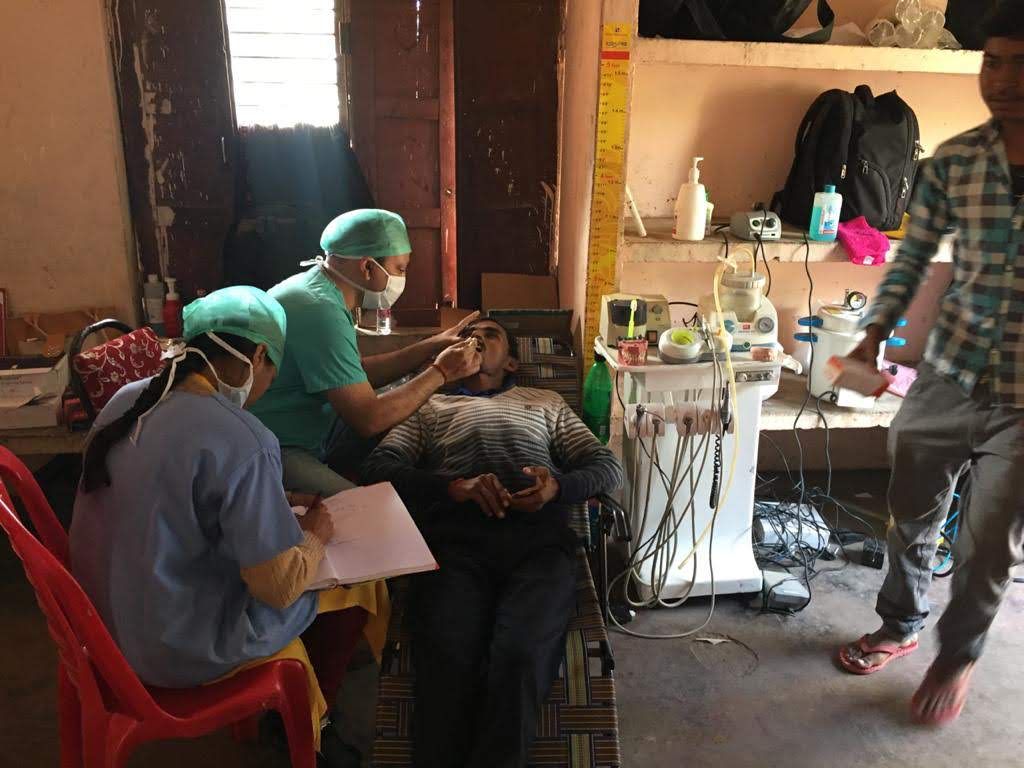
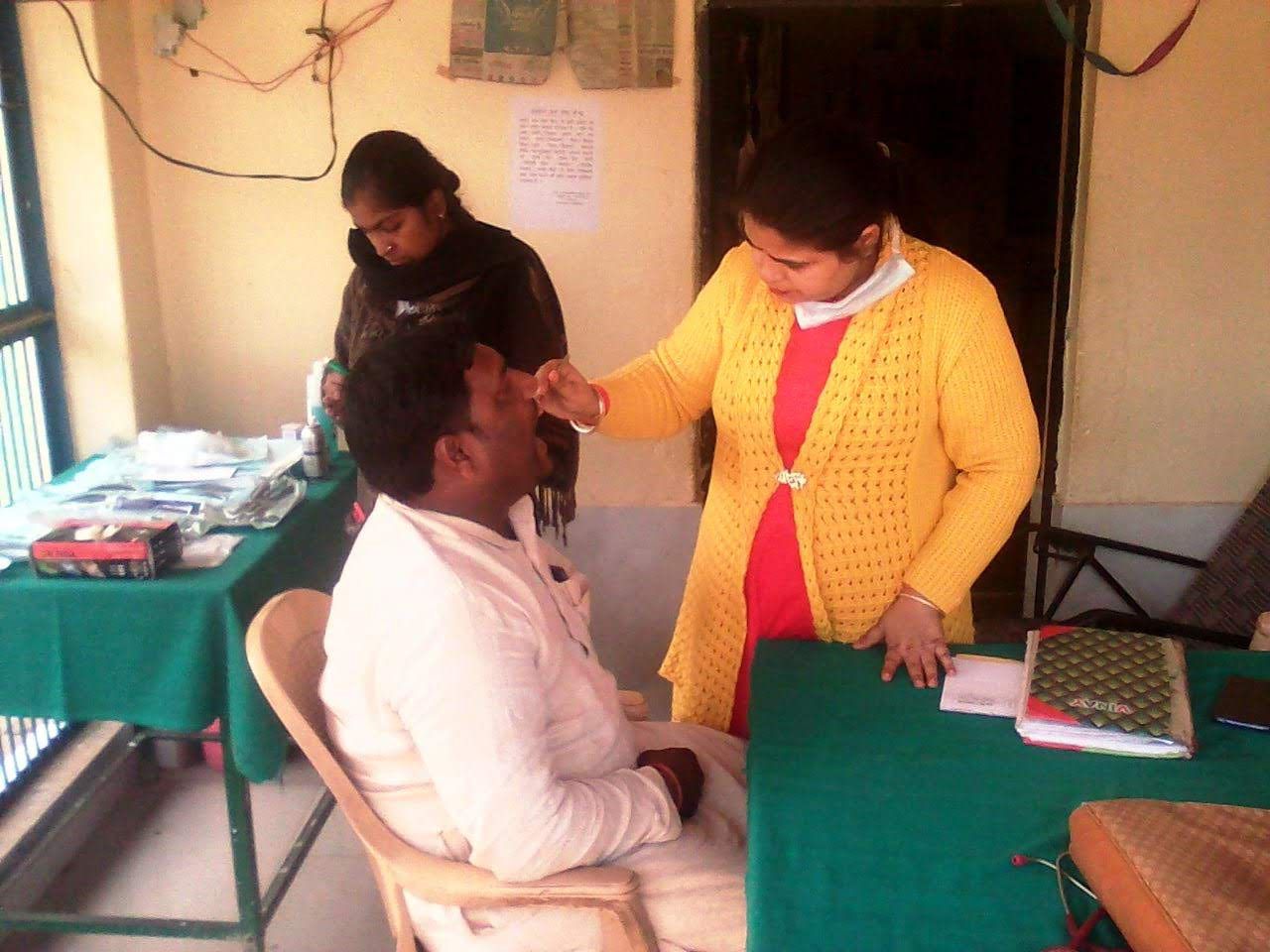
Beyond the kit, DRI conducts regular Multi-Speciality Rural Health Camps that travel to the villages rather than waiting for the villages to come to them. These camps bring together Ayurveda, Naturopathy, and Yoga practitioners alongside doctors from the Institute's Dental Care unit — offering an integrated approach to diagnosis and treatment, with basic diagnostics, free medicines, and on-the-spot consultations for every patient. DRI is also training local nurses — daies — to make safe, dignified maternity care available at the grassroots level, reducing maternal risk and dependence on distant facilities during one of the most critical moments in a family's life. Chronic and serious patients identified through the camps or village health workers are referred to Arogyadham at Chitrakoot, where they receive the full range of specialised care. No one falls through the gap.
This is healthcare reimagined for rural India — grounded in tradition, strengthened by science, and delivered with the dignity every person deserves. The Dadi-Ma-Ka-Batua empowers the family; the camp empowers the community; the trained village health worker bridges both. Together, they create a continuum of care that does not wait for infrastructure to arrive, does not ask the poor to bear the cost of their own neglect, and meets people where they are — with what they need, when they need it. Your support sustains this entire ecosystem, from the herbal kit in a grandmother's hands to the trained midwife attending a birth, to the camp doctor identifying a condition before irreversible damage is done.
(In the ‘Cause of Payment’ section of the Donation form, please choose 'Rural Health Camp' from the Dropdown)
An amount of Rs. 50,000/- would cover the cost of 1 Rural Health Camp.