Our Mission
We are not for ourselves but for our kith and kin; our kith and kin are those who are oppressed and neglected.
Creating measurable, sustainable, and replicable models where rural communities shift behavior towards sustainable lifestyles integrating happiness and fulfillment, with people’s initiation and participation.
To empower rural communities through sustainable development initiatives that promote self-reliance and social change.
The Open Source SDG Knowledge Platform & the World SDG Forum
If you are a grassroots organisation, implementing agency, private and public sector CSR initiative, or a national and international development agency Deendayal Research Institute invites you to join us in building a global network of SDG practitioners, through our Open Source Knowledge Platform and the planned World SDG Forum.
Click here to know more..International
SDG Conferences.
Webinars
on SDGs.
Replicatble Interventions
for SDG Goals 1-8.
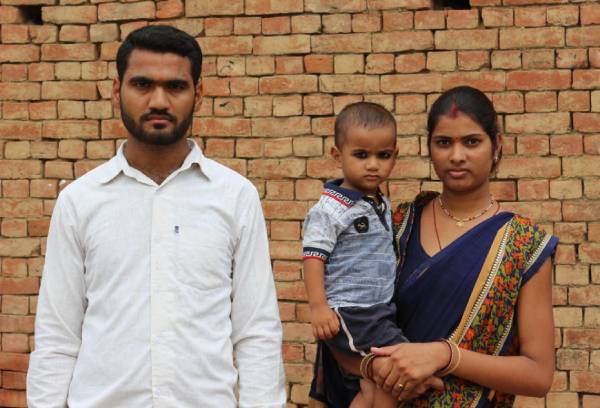
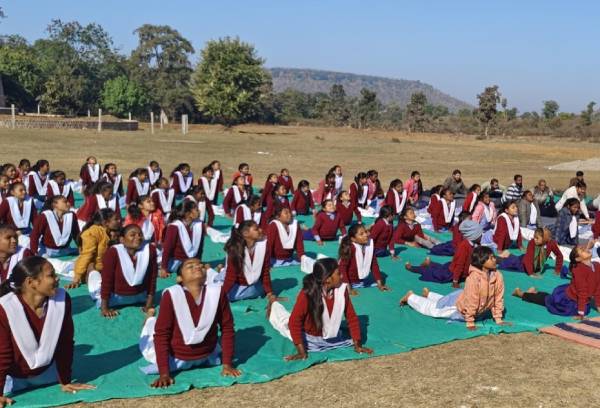
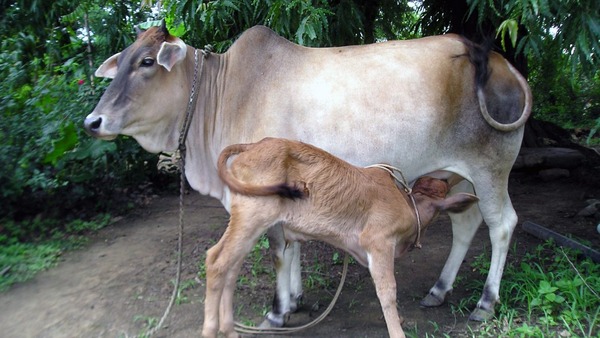
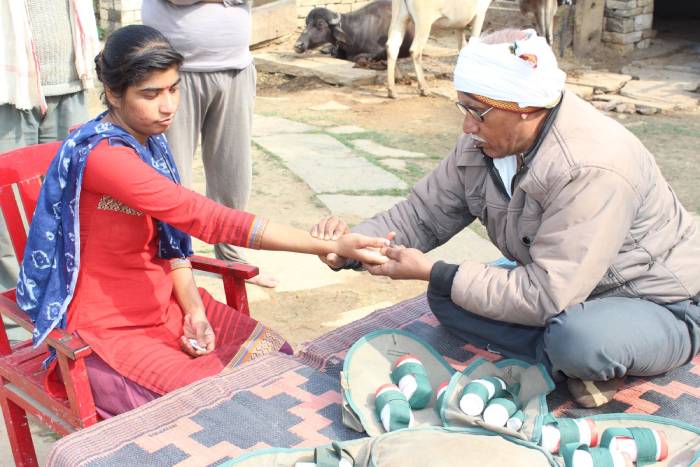
We take this opportunity to appeal to all these have been accomplished through DRI’s ‘Samaj Shilpi Dampatis’ (a graduate married couple) a new concept of counselling and intervention promoted by DRI, the residential students from Scheduled Tribes and Castes in one of India’s most backward regions as well as a cow from our Gaushala, where we preserve Indian breeds and upgrade local breeds..
The concept of Samaj Shilpi Dampatis as catalysts of change in rural India is a unique experiment initiated by Deendayal Research Institute.
Donations from Indians and Persons of Indian Origin (PIOs) are welcome. All donations to Deendayal Research Institute are tax exempt under section 80(G), 35(i)(ii) & and 35(i)(iii). The Institute is registered under Foreign Contribution Regulation Act.
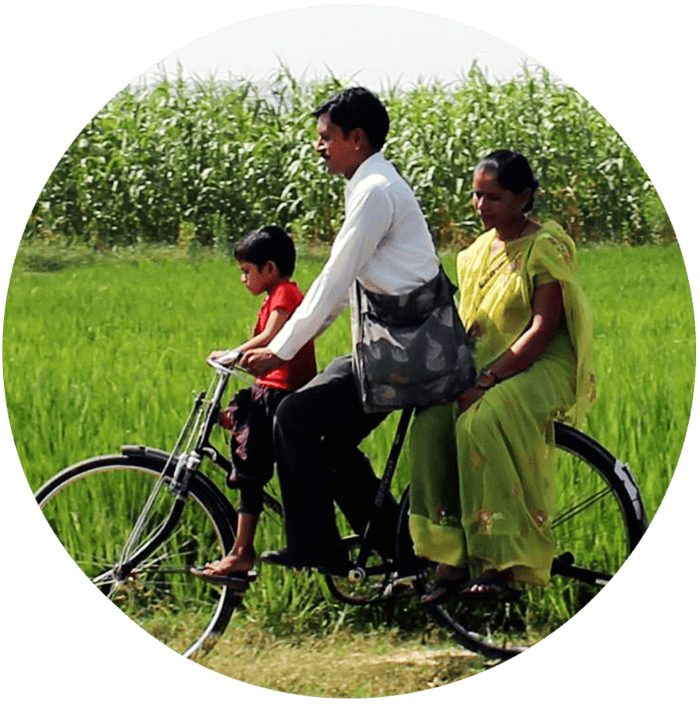
Imagine a young graduate couple — leaving behind city comforts to move into a village, live exactly as the villagers do, and dedicate five years of their lives to making that village free of poverty, unemployment, illness, and illiteracy.
That is the Samaj Shilpi Dampati Yojana — the Social Architect Couples Scheme — launched by the Deendayal Research Institute at Chitrakoot in 1996. These dedicated couples act as catalysts within the community, working through public participation to build villages that are self-reliant, harmonious, and dispute-free.
The Institute provides them free accommodation and covers their honorarium and essential expenses. But this work is only possible with the generosity of people like you.
Your donation directly sustains a Samaj Shilpi Dampati and the hundreds of village families whose lives they touch. Every contribution is a step toward the era-appropriate social reconstruction that Nanaji Deshmukh envisioned.
Join us in building a self-reliant India — one village at a time.
At the Deendayal Research Institute, we believe that educating one girl can transform an entire family — and an entire community.
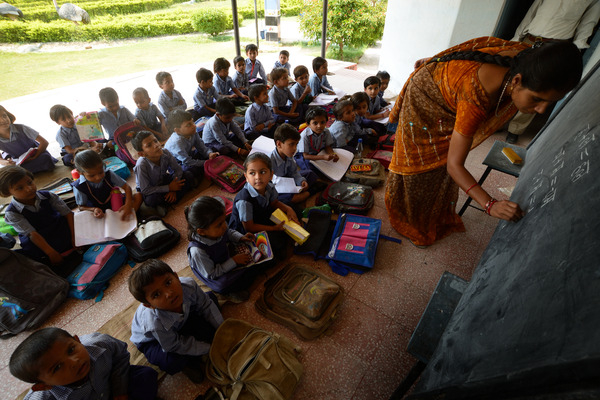
The Krishna Devi Vanvasi Balika Aawasiya Vidyalaya in Majhgawan, Satna district, is home to more than 3,650 tribal girls who might otherwise never have stepped inside a classroom. Founded in the Chitrakoot region by Bharat Ratna Nanaji Deshmukh, this residential school not only follows the government curriculum but provides co-curricular activities designed to build confidence, social awareness, and lifelong skills.
When we first reached out to tribal villages, enrolment was a struggle — awareness was low and old habits ran deep. Today, girls from 95 villages study here, many going on to higher education and self-employment, lifting their entire families in the process.
Your support can keep a girl in school. A sponsorship helps cover her stay, meals, education, and activities — giving her the platform to know her rights, discover her potential, and compete as an equal in the world.
Will you sponsor a girl today?
In Indian tradition, the cow holds a place of deep reverence — not out of superstition, but because of centuries of understanding of her role in sustaining human life, health, and the natural world.
The Gauvansh Vikas Evam Anusandhan Kendra (Bovine Development and Research Centre) at Arogyadham, Chitrakoot, is dedicated to preserving and developing pure Indian cattle breeds. Set on the sacred banks of the Mandakini river, this centre conducts research on native breeds and cross-breeding, improves livestock productivity in surrounding villages, and runs self-reliance programmes for rural communities.
We believe that the flourishing of India’s bovine heritage is inseparable from the all-round development of the nation.
You can be part of this mission by adopting a cow. Your contribution goes directly toward her care, nourishment, and the continuation of this vital research. In return, you carry forward a tradition that has nurtured Indian civilisation for millennia.
Adopt a cow today — and help us protect what truly matters.
Deendayal Research Institute, founded by Bharat Ratna Rashtrarishi Nanaji Deshmukh in 1968, a ‘think and do tank’, is working on multiple dimensions of social sciences with a view to reconstruct Indian Society and develop technologies suitable for sustainable development of India particularly rural India. The institute’s projects and interventions are actively being implemented, particularly focused on income generation, water and sanitation, health, climate resilient agriculture, forestry and knowledge co-creation since 1991. These are being actively implemented in its flagship Chitrakoot Project, as well as in Beed, Nagpur and Gonda. For over five decades, DRI has worked at the intersection of Gandhian and Integral Humanist philosophy, community development, and sustainable livelihoods. Its model village work at Chitrakoot has become a reference point for grassroots development across the country, and the world. DRI’s intellectual foundation draws from Pt. Deendayal Upadhyaya’s philosophy of Integral Humanism, which calls for a harmonious and dharma-anchored order that balances ethics, economy, ecology, energy and employment — a vision that is today strikingly aligned with the global conversation on sustainability and regenerative economics.